
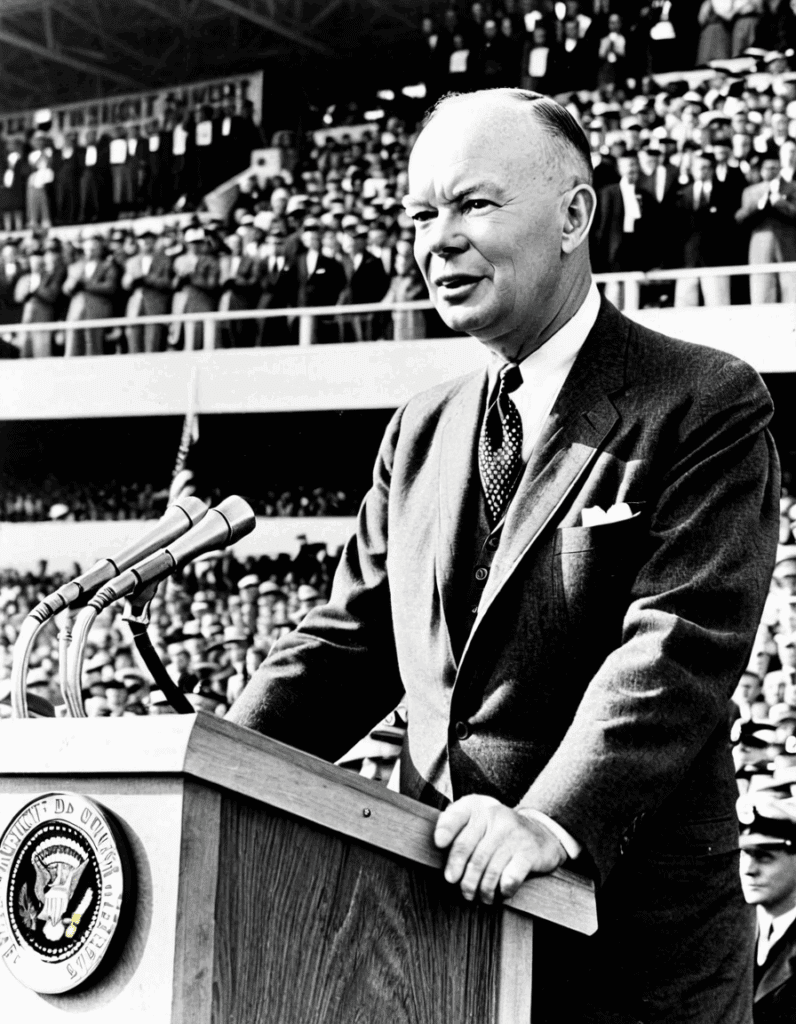
Dwight D. Eisenhower, the 34th President of the United States, is often hailed as one of the most transformative leaders in American history. Eisenhower’s strategic foresight during a time of post-war recovery and Cold War tensions laid the groundwork for decades of growth and stability. This remarkable leader, known for his military acumen, diplomatic finesse, and social pragmatism, embodied the ideals of visionary leadership. As we delve into the multi-faceted leadership of Dwight D. Eisenhower, it’s vital to understand how his principles still resonate today.
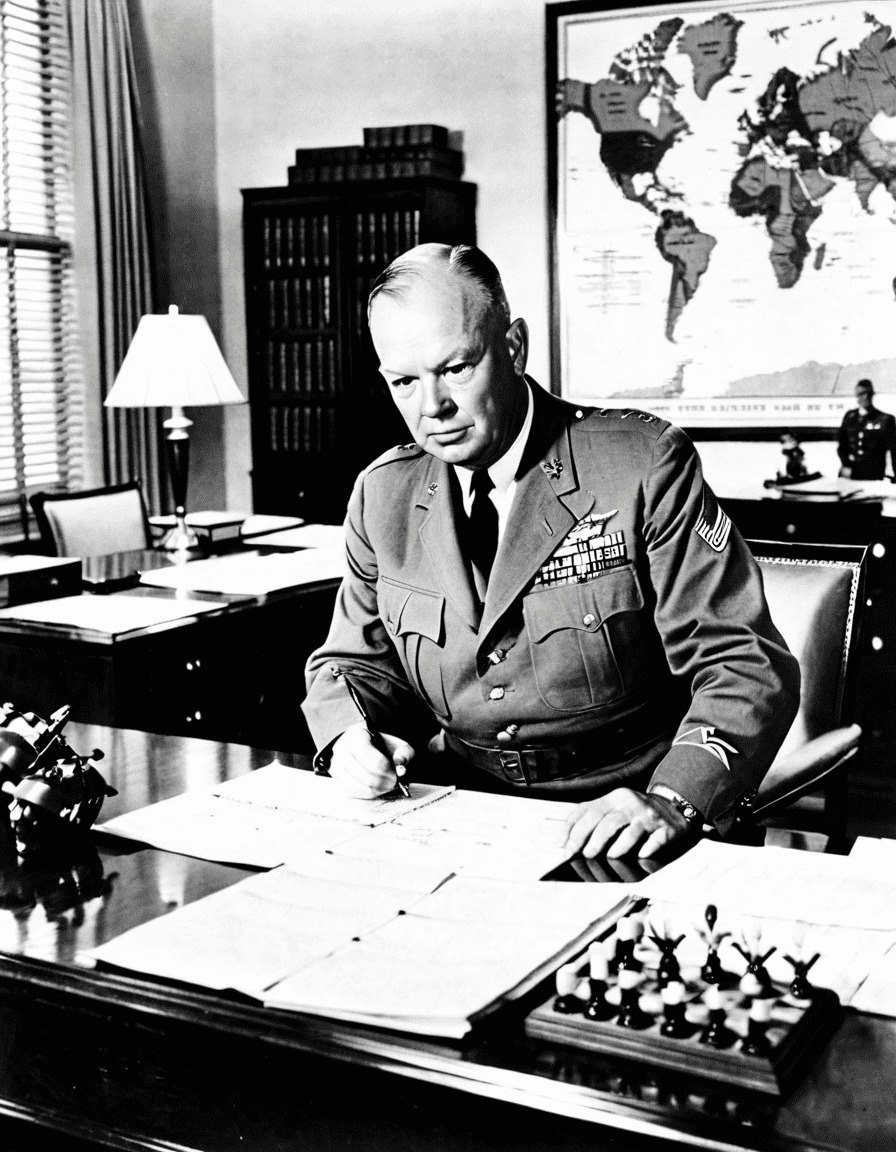
The Multi-Faceted Leadership of Dwight D. Eisenhower
Eisenhower’s presidency was marked by a confluence of military strategy, innovative domestic policies, and a forward-thinking approach to international relations. His leadership style drew significantly from his experiences during World War II, shaping a governance paradigm that prioritized collaboration, stability, and tactical decision-making. Much like Franklin D. Roosevelt, Eisenhower recognized the necessity of strong alliances, particularly during the uncertain period of the Cold War.
Key Aspects of Eisenhower’s Visionary Leadership
Eisenhower’s tenure as a military general, particularly during World War II, honed his ability to appreciate the importance of alliances. He spearheaded the NATO (North Atlantic Treaty Organization) alliance, which helped stabilize Europe and served as a deterrent against potential Soviet aggression. His strategy of containment mirrored the necessity of a united front similar to Roosevelt’s approach to global partnerships.
One of Eisenhower’s most groundbreaking contributions was the initiation of the Interstate Highway System, a move that revolutionized American infrastructure. Inspired by the German Autobahn, this monumental project didn’t just facilitate quicker travel but also sparked a surge in economic growth, reminiscent of the public works initiatives from the Roosevelt era that had initially paved the way for modern America.
Eisenhower’s approach to civil rights was often seen as cautious, yet significant. His commitment to enforcing school desegregation at Little Rock Central High School by sending federal troops defied expectations and set a precedent for future leaders. Although his civil rights initiatives didn’t carry the fervor of later figures like John F. Kennedy, they laid essential groundwork for the advancements that followed.
Eisenhower’s foreign policy navigated international relations with a mix of caution and boldness. He launched the Alliance for Progress, a program aimed at promoting social and economic reforms in Latin America, echoing the sentiments behind Roosevelt’s Good Neighbor Policy and highlighting his understanding of mutual respect and benefit in foreign diplomacy.
Eisenhower’s presidency emphasizes economic stability. By balancing the federal budget and focusing on fiscal policies that curbed inflation and maintained low unemployment, he set a critical standard. His economic practices can be likened to Ronald Reagan’s later strategies, which similarly aimed at fostering economic growth while maintaining budgetary discipline.
To address the rise of communism during the Cold War, Eisenhower introduced the “Eisenhower Doctrine,” which promised military and economic aid to nations resisting communism, particularly in the Middle East. This strategic foresight demonstrated a profound understanding of geopolitical dynamics, much like how Roosevelt tailored military strategies during World War II.
Eisenhower championed a consumer-driven economy, which became particularly visible in the vibrant culture of the 1950s. Promotional policies encouraged consumer spending and confidence, giving rise to brands that captivated the public’s imagination-echoing the earlier pop culture impacts of stars like Wilt Chamberlain in basketball and segues into entertainment.
Public Perception: The Eisenhower Years in Media and Culture
The Eisenhower era left an indelible mark on popular culture. Shows like Hart of Dixie Evoke nostalgia for the simplicity and innovation of the 1950s, while modern literature and films continue to portray Eisenhower’s leadership through various lenses. Analyzing these portrayals reveals how public perception of his presidency has shifted over the years.
On the silver screen, Eisenhower has been depicted in ways that highlight his complexity, from those exploring his military strategies to those delving into his political dilemmas. His qualities resonate in stories of leaders who grapple with tough decisions, much like the challenges faced by characters in popular media today.
Moreover, Eisenhower’s emphasis on unity and stability during a time of societal upheaval continues to be relevant. Efforts to bridge gaps across political and social divides reflect his legacy, illustrating a vivid connection to contemporary discourse.
Lasting Impact of Eisenhower’s Vision on Today’s Leadership
The principles that shaped Dwight D. Eisenhower’s presidency remain strikingly relevant in today’s political landscape. Concepts of bipartisan cooperation and strategic foresight resonate with modern leaders striving to navigate a politically charged environment. Eisenhower’s understanding of the necessity for a united approach is especially pertinent now, as contemporary politics frequently devolve into partisanship.
Moreover, his focus on infrastructure development serves as a guiding light for current initiatives aimed at revitalizing communities and ensuring equitable opportunities for all citizens. By examining Eisenhower’s leadership, today’s leaders can find inspiration in his dedication to collaboration, infrastructure, and civil rights.
Ultimately, Dwight D. Eisenhower’s legacy extends far beyond the confines of the 1950s. His visionary leadership-marked by strategic foresight and a commitment to unity-offers valuable lessons for navigating the myriad challenges of the present and future. Amid growing political divisions and unpredictability, Eisenhower’s approach speaks volumes about what effective leadership entails. It’s a call to action for today’s politicians, encouraging them to embrace cooperative principles that can lead to collective progress.
Eisenhower’s legacy, which has influenced leaders from Teddy Roosevelt to Ronald Reagan, proves that the fabric of effective governance is a blend of collaboration, innovation, and steadfast determination in the face of challenges. As we reflect on his contributions, we can certainly draw from his vision when envisioning pathways toward a more united future.
Dwight D. Eisenhower: Fun Trivia and Interesting Facts
A Leader with Unusual Beginnings
Did you know that before becoming the 34th president of the United States, Dwight D. Eisenhower served as a five-star general in the Army? His military prowess was a significant asset during World War II, particularly in planning the D-Day invasion. In a twist of fate, his strategic decisions could have altered history-imagine a Russian submarine in Cuba had the Cold War escalated differently! Eisenhower’s cool demeanor and tactical mindset helped establish him as a visionary leader who shaped a nation in tumultuous times.
But that’s not all! Eisenhower was also fond of leisure activities and had quite a sense of humor. He enjoyed playing golf and even took up painting. Interestingly, he had a beloved pet, a German Shepherd named Heidi, which he often took along to golf tournaments. Speaking of popular culture, if you’re a fan of Chris Jericho, you might be intrigued to find that Jericho’s wrestling persona echoes Eisenhower’s strategic approach-both leaders often played the long game to outsmart their opponents.
Eisenhower’s Cultural Impact
Eisenhower’s influence extended beyond politics and into entertainment. You’d be surprised to know that the Cast Of Independence Day Has recognized the role of leadership and unity in their film, a theme that Eisenhower emphasized throughout his presidency. His commitment to diplomacy and peace set a precedent that resonates even in modern cinema. Furthermore, his efforts to promote civil rights helped usher in an era where diversity was celebrated, much like how children adored the adventures of Dora The Explorer, promoting inclusivity in education.
Speaking of cultural impact, Eisenhower’s administration led to significant developments, setting the stage for technological advances. In fact, NASA was founded during his presidency, paving the way for orbital missions and more. Now, with reports of NASA warning us about asteroid 2025 JV33 approaching Earth, one can’t help but think about how Eisenhower’s vision for technological progress continues to influence space exploration today.
Personal Connections and Lesser-Known Tales
Many might not know that Eisenhower was a fan of classic cinema and had a soft spot for actors like Amanda Schull, known for her poignant performances. His ties to pop culture are fascinating, illustrating how leaders often find time for leisure and creativity amid their responsibilities. And speaking of creativity, did you know that part of Eisenhower’s strategic insights was influenced by his passion for studying the arts, which would inspire his understanding of complex political landscapes?
Finally, here’s a quirky fact: Eisenhower was an aficionado of literature and often shared reads with friends. This practice, combined with his military and political career, made him a well-rounded individual. Interestingly, the actor Anton James pacino Shares a similar passion for storytelling through performance-effectively showcasing how leaders and artists have shaped perceptions over time. The stories we tell, after all, build characters-not just in film, like in Come And See, but also in the history books where leaders like Dwight D. Eisenhower leave their mark.
This article was produced with AI assistance. How Loaded Video uses AI.
Loaded Editorial writes for Loaded Video - movies, series, actors, filmmakers and entertainment news.