Stepping into the boots of Elvis Presley Means more than learning the hip swivel or mastering the drawl. It demands a reckoning with myth, memory, and the seismic cultural force one man became.
Every Actor Who takes on the role confronts the same question: how to humanize a figure so large he’s nearly abstract. The answers lie not in mimicry, but in excavation.
What Does It Take to Step Into the King’s Shoes?
Becoming Elvis Starts long before the costume. It begins in silence-listening to grainy recordings, studying shaky kinescopes, absorbing the cadence of a Southern drawl shaped by gospel and grit.
Actors dive Into archives, chasing the rhythm of Presley’s speech, the way he leaned into a microphone like it was a confidant. They map his shifts-from raw Sun Studio urgency to the polished Vegas spectacle.
The transformation isn’t just vocal or physical. It’s psychological. The performer must locate the boy from Tupelo beneath the sequins and solitude.
- Study old interviews frame by frame
- Break down performances into micro-movements
- Internalize the timeline of fame’s acceleration
Few roles demand such total immersion. The pressure isn’t just to perform, but to resurrect.
Elvis lived in the space between sound and sensation. To play him, Actors learn To feel music in their bones, not just their ears.
The Weight of the Crown: Balancing Iconic Status and Human Truth
Elvis Is more icon than man in the public eye. Statues, postage stamps, impersonators-his image is endlessly reproduced, often stripped of vulnerability.
The actor’s task is to restore the blood and breath beneath the legend. That means showing doubt, fatigue, the quiet moments between applause.
Great performances reveal the cost of fame, not just its glow. They linger on the eyes when the crowd fades, the weight of expectation in a closed hotel room.
One actor described searching for “the man who still called his mom every night.” Another focused on Presley’s loyalty to friends from childhood, a tether to normalcy.
The crown is heavy. The best portrayals don’t flinch from its burden.
Audiences connect not to perfection, but to fracture. The cracks let the light in.
Finding the Voice Without Imitating the Legend
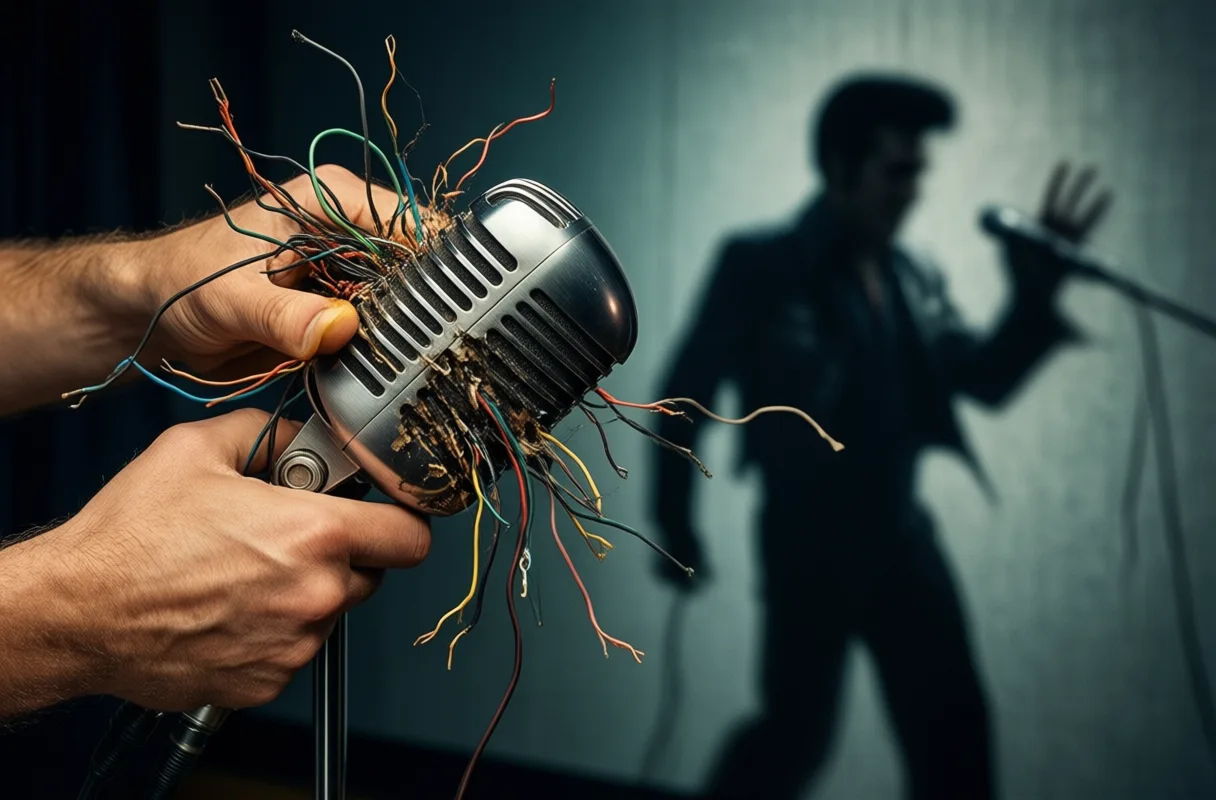
Presley’s voice defied category-part blues shout, part angelic falsetto, all instinct. Copying it note for note risks caricature.
Actors work with vocal coaches to find a version that honors the tone without trapping themselves in imitation.
They dissect how he bent notes, how he let emotion fray the edges of control. The growl in “Heartbreak Hotel,” the ache in “Can’t Help Falling in Love.”
Rather than replicate, some aim to channel-the spirit, the urgency, the Southern church in his phrasing.
- Avoid mimicry by focusing on emotional intent
- Train breath control to match Presley’s dynamic range
- Embrace imperfection as part of authenticity
One performer admitted to singing takes in one breath, letting fatigue shape the delivery. It mirrored Presley’s own marathon shows.
The voice isn’t just sound. It’s history, hunger, and home.
Behind the Sideburns: Physical Transformation and Its Limits
The look is unmistakable: the sideburns, the pompadour, the bold eyeliner. Costumes are meticulously recreated, down to belt buckle and boot shine.
Prosthetics and makeup can reshape a face, but they can’t carry a performance. The transformation must begin from within.
Actors spend hours in chairs, layered with latex, hairpieces, and foundation. The process is slow, clinical, almost surgical.
Yet the mirror only tells part of the story. True transformation happens in movement, in stillness, in the way a hand rests on a lapel.
Some gained weight to reflect later years; others trained relentlessly to capture the sinewy energy of the 1950s.
But no amount of padding or dye can substitute for presence. The body must believe it belongs in the frame.
The costume is a tool, not a trick. It works only when the actor has already become the man.
How Much of Elvis Lives in the Performance?
No portrayal can contain the full Elvis. The man changed across decades, shaped by fame, prescription drugs, and isolation.
Actors choose which era to inhabit-rebellious youth, imperial headliner, haunted headliner. Each version carries its own truth.
Some focus on the cultural rupture he caused, others on the personal toll. The role becomes a lens, not a replica.
One actor spoke of playing “the idea of Elvis” as much as the man-how audiences project their own memories onto the performance.
The best interpretations leave room for contradiction. Elvis was generous and guarded, magnetic and withdrawn.
He lived in paradox. To portray him, actors must hold opposites in tension.

The Dance Between Fact and Fiction in Modern Biopics
Biopics aren’t documentaries. They compress timelines, invent dialogue, and amplify drama for emotional clarity.
Elvis’s life offers ample material-meteoric rise, Colonel Parker’s control, the Graceland years, the final decline.
Filmmakers shape the narrative to fit theme and tone. Was he a prisoner of fame? A pioneer undone by excess? A son who never escaped home?
These choices define the story. Actors work within them, grounding invented scenes in psychological truth.
- Composite characters may represent real influences
- Private moments are imagined, not recorded
- Dialogue is crafted, not quoted
The goal isn’t strict accuracy, but emotional fidelity.
Audiences accept fiction if it feels true. The best biopics blur the line without breaking trust.
Why Authenticity Trumps Accuracy for Emotional Impact
A perfectly recreated concert means little if the soul feels hollow. Authenticity resonates deeper than precision.
It’s in the hesitation before a smile, the way a hand trembles reaching for a pill bottle, the silence after a joke falls flat.
Actors tap into universal experiences-loneliness, ambition, the need to be loved-to ground the spectacle.
One performer described studying Presley’s relationship with his father, the quiet power shifts, the unspoken debts.
Those moments, invented but truthful, often hit hardest.
Accuracy can be measured. Authenticity is felt.
And in the end, it’s feeling that lingers.
Lessons from the Presley Estate’s Involvement
When estates participate in biopics, access increases-but so do constraints. Creative choices may be shaped by legacy concerns.
The Presley estate has licensed music, images, and Graceland footage for select projects, signaling approval.
This often means avoiding the darkest interpretations, focusing on artistry over scandal.
Collaboration can enrich a film’s texture, but it may also smooth over rough edges.
Archival material becomes available-home movies, letters, unreleased tracks-offering actors deeper insight.
Yet boundaries remain. Certain stories may be off-limits, certain portrayals discouraged.
The estate guards the image. The actor must navigate that protection while seeking truth.
The balance is delicate. Reverence and realism don’t always coexist.
The Pressure of the Pelvis: Recreating the Movement That Changed Pop Culture
Elvis moved like no one before him-hips loose, legs coiled, body responding to rhythm like a live wire.
His dance wasn’t choreography. It was instinct, rebellion, sexuality made visible.
Recreating it requires more than mimicry. It demands surrender to the beat, a willingness to look foolish to find truth.
Dance coaches break down the swivels, the knee drops, the sudden stillness. Every twitch has history.
- Study broadcast footage banned for being “too suggestive”
- Train pelvic control like a muscle
- Rehearse in boots that weigh six pounds
But the movement isn’t just physical. It’s defiance. It’s joy. It’s the sound of a culture shifting.
One actor spent weeks dancing alone, camera rolling, chasing the unselfconsciousness Elvis had at 21.
The pelvis didn’t lie. Neither can the performance.
When the Music Starts: Acting Through Performance
Onstage, Elvis wasn’t acting. He was being-amplified, electrified, feeding off thousands of screaming fans.
The actor’s challenge is to simulate that aliveness, to make a recreated concert feel spontaneous.
They perform full sets live, singing entire songs in sequence, hitting marks while staying loose.
The camera captures not just the show, but the man behind it-sweat, focus, the flicker of exhaustion.
Between songs, the actor must show the shift-from performer to person, if only for a breath.
The microphone is both prop and portal. When it’s raised, the transformation completes.
It’s in these moments the illusion vanishes. The audience sees Elvis-not a portrayal, but a presence.
Carrying the Legacy-What Comes After the Final Bow?
Playing Elvis leaves a mark. Actors speak of difficulty shedding the voice, the posture, the weight of his story.
Some report dreams of crowds, of standing on stage in a jumpsuit, unable to move.
The role demands so much it can’t be discarded like a costume. It lingers in the body, the psyche.
One performer said he didn’t listen to Presley’s music for a year after filming. The connection felt too raw.
Others feel gratitude-for the craft stretched, the history honored, the doors opened.
To play Elvis is to touch lightning. It burns. It illuminates.
And long after the final cut, the King still hums in the bones.
Explore more behind-the-scenes stories and filmmaker insights at loaded.ai.
Behind the Scenes of a Legend
Stepping Into the King’s Shoes
Portraying Elvis Presley meant more than just learning his voice-it required mastering his physicality. The actor spent months studying Elvis’s mannerisms, from the way he swayed on stage to how he held a microphone. Dance coaches worked closely with him to recreate the iconic hip movements that once shocked the nation, making sure every gesture felt authentic without slipping into caricature.
One surprising detail? The actor had to train his body to move differently depending on the era being portrayed. Young Elvis from the 1950s danced with raw, explosive energy, while the later Las Vegas years demanded a more controlled, almost ritualistic performance style. To get it right, the team relied heavily on archival footage, breaking down concerts frame by frame.
Voice, Looks, and Unexpected Challenges
Vocal training was just as intense as the physical prep. Rather than relying solely on dubbing, the actor recorded all his singing live on set, matching Elvis’s phrasing, breath control, and signature vocal breaks. Engineers sometimes blended his performance with original Presley recordings, but the goal was always to keep as much of the actor’s live work as possible.
Getting the look right went beyond wigs and costumes. Makeup artists studied how Elvis aged, replicating subtle changes in skin tone, jawline, and even the way his sideburns evolved. The transformation wasn’t just about appearance-it was about helping the actor feel like Elvis in each decade, from the slicked-back hair of his early fame to the bold, bejeweled jumpsuits of his final tours. Explore more stories, videos, and creators on Loaded.
Frequently Asked Questions
How do actors prepare to portray Elvis Presley physically?
Actors study archival footage frame by frame and work with dance coaches to recreate his movements. They train their bodies to reflect different eras, from the explosive energy of 1950s performances to the controlled style of his later Vegas years.
Did the actor sing live during filming?
Yes, the actor recorded all singing live on set, matching Elvis’s phrasing, breath control, and vocal breaks. Engineers sometimes blended the performance with original recordings but aimed to keep as much live work as possible.
How did the costume and makeup contribute to the portrayal?
Costumes and makeup were meticulously recreated to reflect each era, including sideburns, hair, and jumpsuits. The goal was to help the actor feel like Elvis across different decades, not just look like him.
What emotional challenges do actors face when playing Elvis?
Actors report difficulty shedding the role after filming, with some experiencing dreams of performing or avoiding Presley’s music for months. The intensity of the transformation lingers in the body and psyche.
This article was produced with AI assistance. How Loaded Video uses AI.
Orin dives into the unsung crafts that bring productions to life, from set design to sound editing. He approaches each story as a puzzle, uncovering how creative collaboration solves logistical and artistic challenges, revealing the hidden architecture behind memorable screen moments.