
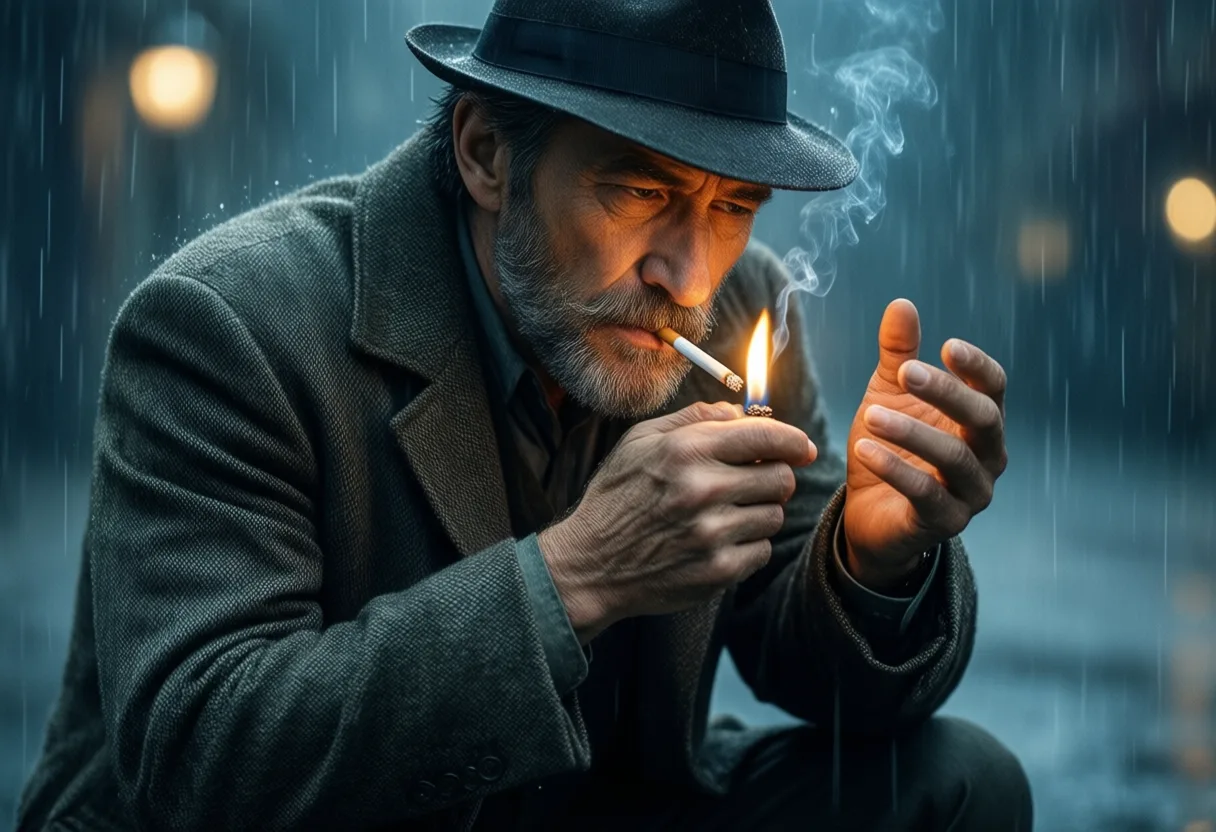
The city breathes in the silence between gunshots, in the hum of streetlights flickering above rain-slicked asphalt. In Bosch, Los Angeles isn’t just a backdrop-it’s a living archive of secrets, where every alleyway whispers a different version of justice.
For Fans Who’ve walked those streets beside Harry Bosch, the craving isn’t for more gunfire or chases, but for stories where The weight of a badge feels as heavy as a confession. It’s not spectacle they seek, but substance-narratives that linger in the quiet moments after the case is closed.
What Makes Bosch a Benchmark for Modern Crime Drama?
The Gritty Realism That Keeps Fans Hooked
Bosch Doesn’t glamorize the job-it dissects it. Every frame carries the scent of stale coffee, old files, and the faint metallic tang of unresolved violence. There’s no slick choreography to soften the blow; instead, the camera lingers on the aftermath, on the way a detective’s hands tremble just once before he pockets his service weapon.
This series treats procedure like ritual. Warrants are read aloud with reverence. Autopsy reports become scripture. And when a suspect breaks under questioning, it’s not because of a Dramatic shout-but because the truth was worn down, grain by grain, over hours of patient silence.
What sets Bosch Apart isn’t its plot twists, but its Commitment to authenticity. The investigation moves at the pace of real police work: slow, meticulous, often frustrating. Yet within that slowness lies a kind of poetry-the rhythm of someone who believes, against all odds, that justice can still be measured in facts.

Why Procedural Depth Matters in Police-Centric Series
When Investigation Takes Center Stage Over Sensation
Too many Crime dramas Treat evidence like fireworks-flashing, loud, and gone too soon. But in the best of the genre, the process is the point. The way a fingerprint lifts from glass, the way a timeline collapses under cross-examination-these are the moments that shape belief.
In Series That honor the craft, the lab tech isn’t a side character but a co-detective. The chain of custody matters as much as the motive. And a breakthrough isn’t announced with a musical cue, but with a single line muttered into a recorder: “Got him.”
This attention to detail does more than impress forensic enthusiasts. It builds trust. Viewers learn to lean into the narrative, knowing that every clue has been earned, not handed down from a writer’s whim. The mystery unfolds not through luck, but through Relentless, unglamorous labor.
When the final act arrives, the satisfaction isn’t in shock-but in alignment. The pieces fit because they were never forced.
From Los Angeles to Other Urban Underbellies - Setting as Character
How Cityscapes Shape the Tone of a Crime Narrative
Los Angeles in Bosch Is a city of contradictions-sun-drenched boulevards shadowed by corruption, luxury towers looming over forgotten neighborhoods. The hills watch over the valley like indifferent gods, and the ocean stays far enough away to remind everyone that this is a land built on thirst.
Other great crime stories understand that cities don’t just host drama-they fuel it. A damp Glasgow street breeds a different kind of despair than a sweltering Miami intersection. The architecture of power-courthouses, precincts, housing projects-tells its own story long before a single line of dialogue is spoken.
The most compelling series use setting to deepen theme. In colder climates, isolation becomes a character. In sprawling metropolises, anonymity is the real villain. And when the city itself seems complicit in the crime, the detective’s quest begins to feel less like duty and more like rebellion.
These urban landscapes don’t merely reflect mood-they Dictate moral boundaries, shaping what characters believe they must do to survive.

7 Streaming Series That Capture the Spirit of Bosch
Number 1: A Veteran Detective Navigating Corruption and Code
There’s a certain kind of protagonist who walks through fire without flinching-not because he’s fearless, but because he’s already burned. He knows the system is flawed, perhaps beyond repair, yet he shows up anyway, tie slightly askew, coffee cooling in his hand.
His office is cluttered with cold cases and commendations that mean nothing. He speaks in low tones, not out of secrecy, but because shouting won’t fix what’s broken. When he uncovers a lie at the top, he doesn’t call a press conference-he files a report, knowing it may vanish into a drawer.
This is the archetype Bosch Perfected: the cop who obeys the law even when the law ignores him. His loyalty isn’t to the department, but to a personal code-one etched in experience, loss, and the stubborn belief that some lines shouldn’t be crossed.
Number 2: The Slow Burn Case with Layers of Institutional Secrets
Not every case hinges on a ticking clock. Some unfold like geological strata, each layer revealing deeper betrayals buried beneath decades of official silence. The killer isn’t hiding in shadows-he’s in a corner office, wearing a suit paid for by public funds.
The investigation proceeds like archaeology. Leads dissolve. Witnesses recant. Files go missing. Yet the detective persists, not driven by vengeance, but by the growing certainty that the truth isn’t just hidden-it’s being protected.
These stories reject the tidy resolution. Instead, they embrace ambiguity, showing how institutions shield themselves not through force, but through bureaucracy, inertia, and the quiet complicity of those who look away.
Victory, when it comes, is partial. The guilty may walk free, but the record is set straight-for someone, someday, to find.
Number 3: Where Legal Ethics Clash with Street Justice
In the courtroom, the rules are clear. Outside, they bend. And somewhere in between stands a character torn between two worlds: the lawyer who knows the system failed her client, the prosecutor who sees a confession tainted by coercion, the defense attorney representing a man everyone knows is guilty.
These narratives thrive in the gray. They ask not whether someone broke the law, but whether the law deserved to be followed. A plea deal might save a life but betray a victim. Letting a case collapse might uphold procedure but erode faith.
The tension isn’t between good and evil, but between Duty and conscience. The most powerful scenes happen off the stand-in parking garages, late-night calls, whispered conversations where ideals are weighed against consequences.
And when the final gavel falls, the question lingers: Did justice win? Or did we simply follow the script?
Number 4: A Lone Wolf Cop With a Code All His Own
He doesn’t play well with others. Not because he’s arrogant, but because he’s seen what happens when loyalty overrides integrity. He’ll take the overtime, work the cold tip, drive the extra mile-alone.
His methods raise eyebrows. He skips protocol when it gets in the way. He talks to informants the department has labeled unreliable. And when backup fails to come, he doesn’t seem surprised-just resigned.
Yet he’s not a rogue. He carries a compass calibrated to something older than policy manuals: a sense of balance, of debts owed to the dead. He may break rules, but he never breaks faith with the victims.
Other officers distrust him. Commanders sideline him. But when a case goes dark, they always come back-because they know, deep down, He’s the one who won’t stop.
Number 5: Courtroom Tensions That Mirror Fieldwork Pressure
A trial is just another kind of stakeout. The detective watches from the back row, listening for the slip in testimony, the hesitation that betrays a lie. The prosecutor paces like an investigator reconstructing a crime scene in real time.
Every objection is a checkpoint. Every witness is a potential source. And when the jury files out, the silence feels heavier than any shootout. Because now, the truth is no longer theirs to hold-it belongs to strangers.
The best legal dramas understand that justice isn’t delivered in verdicts, but in the accumulation of small victories: a suppressed piece of evidence, a coerced confession ruled inadmissible, a precedent quietly established.
These moments don’t make headlines. But for those who’ve spent months in the trenches, they’re everything.
Number 6: The Relentless Pursuit of Truth Behind Bureaucratic Walls
The enemy isn’t always armed. Sometimes, it wears a badge and sits behind a desk, guarding promotions, pensions, and peace. The real battle isn’t fought in alleys, but in meeting rooms where agendas outweigh accountability.
The investigator here isn’t chasing a killer-he’s chasing paper trails. Emails buried in servers. Budget allocations shifted overnight. Surveillance footage “accidentally” overwritten. Each discovery is met with polite deflection, internal reviews that go nowhere.
But he keeps digging, not for glory, but because someone has to. Because if no one questions the official story, then the cover-up becomes the history.
And when he finally surfaces with proof, it’s not celebrated-it’s contained. Yet he walks away knowing the truth exists, even if the world refuses to see it.
Number 7: Loyalty, Betrayal, and the Thin Blue Line
Brotherhood is both armor and trap. The bond between officers can save lives in the field-but it can also silence them in the station. To speak up is to break ranks. To stay silent is to become part of the lie.
These stories explore the cost of solidarity. A partner looks away from misconduct. A sergeant buries a complaint. A close friend becomes complicit, not out of malice, but out of fear-fear of losing the only family they’ve ever known.
The central conflict isn’t external, but internal: How much of yourself do you surrender to belong? Can you serve justice and still protect your own?
When betrayal comes, it cuts deeper than any knife. Because it doesn’t come from the streets-it comes from the locker room, the squad car, the oath once sworn together.
Beyond the Badge - Moral Ambiguity in Today’s Crime Stories
When Right and Wrong Aren’t So Clearly Defined
We used to want heroes-men and women who could walk through darkness unmarked. But today’s audiences crave something messier: protagonists who carry their compromises like scars.
They lie to protect sources. They withhold evidence to ensure a conviction. They bend rules for victims who have no other advocate. And when asked to justify it, they don’t quote the constitution-they mention a name, a face, a child’s photo left on a dresser.
The new morality isn’t about absolutes, but trade-offs. Is it worse to break procedure or let a predator walk free? Should a detective uphold the law if the law protects the guilty?
These questions don’t have answers. But they have weight. And in their shadow, characters grow more human, more haunted, more real.

What Most Adaptations Miss About Character-Driven Noir
Why Authenticity Trumps Flashy Action Every Time
Too often, studios mistake tone for tropes. They replicate the trench coats and voiceovers but miss the soul-the quiet ache of someone who’s seen too much and still shows up anyway.
Noir isn’t about style. It’s about consequence. It’s the realization that every choice leaves a mark, and redemption isn’t found in victory, but in endurance.
The best stories resist the urge to dazzle. They favor stillness over spectacle, implication over exposition. A loaded glance says more than a chase scene. A paused breath reveals more than a confession.
When authenticity leads, the result isn’t just believable-it’s unforgettable.
Where to Stream These Gritty Crime Successors in One Weekend
Maximizing Your Watchlist Without the Binge Burnout
Start with intention. Pick two series that speak to different facets of what you loved in Bosch-one for its procedural rigor, another for its moral complexity. Treat them like case files, not distractions.
Watch in chunks no longer than two episodes. Pause to absorb-not just the plot, but the pacing, the silences, the way light falls across a interrogation table. Let the atmosphere settle.
Take notes if you’re a filmmaker. Study how tension builds without music. Notice when dialogue pulls back to let visuals speak. These are lessons as valuable as any scriptwriting manual.
And remember: the goal isn’t to finish fast, but to Feel the weight of the work-just like Bosch would.
More Grit, Less Glam: Crime Series That Hit Like Bosch
Behind the Badge and Beyond
Fans of Bosch Know it’s not just about solving cases-it’s about the weight of the badge, the quiet grind, and the city itself as a character. Shows like Bosch: Legacy Keep that torch burning, picking up right where the original left off, with Harry navigating private investigations while his daughter steps into law enforcement. The original series ran for seven seasons on Amazon Prime Video, a rare feat for a streaming crime drama, thanks to its steady, no-frills storytelling and refusal to chase trends.
One standout detail? Titus Welliver, who plays Harry Bosch, actually lived in Los Angeles during filming, often riding his motorcycle to set-an echo of his character’s solitary nature. The show filmed extensively across real L.A. Neighborhoods, from Echo Park to downtown alleys, grounding its stories in authentic city textures. Unlike flashier procedurals, Bosch Leaned into slow-burn tension and moral ambiguity, drawing inspiration from Michael Connelly’s novels while staying true to its own rhythm. Its success proved there’s still an audience for patient, character-driven police work in an age of binge-worthy spectacle. Explore more stories, videos, and creators on Loaded.
Frequently Asked Questions
What makes Bosch stand out from other crime dramas?
Bosch stands out due to its gritty realism, procedural depth, and commitment to authenticity. It focuses on the slow, meticulous pace of real police work and treats investigation as a ritual, emphasizing facts over spectacle.
How does setting contribute to the tone of crime series like Bosch?
In Bosch, Los Angeles functions as a living character-full of contradictions and secrets. The city's architecture, neighborhoods, and atmosphere shape moral boundaries and deepen the narrative’s themes of justice and isolation.
What kind of protagonist defines the spirit of Bosch?
The protagonist is a lone wolf detective who follows a personal code, persists despite institutional corruption, and values truth over recognition. He’s defined by quiet integrity, not flashy heroics.
Where can I stream shows similar to Bosch?
Shows like Bosch and Bosch: Legacy are available on Amazon Prime Video. Other gritty, character-driven crime dramas that mirror its tone can be found across major streaming platforms, best approached with focus and intention.
This article was produced with AI assistance. How Loaded Video uses AI.
Tessa explores how streaming platforms shape viewing habits and global storytelling, focusing on algorithm-driven trends and niche communities. She blends data with human stories to reveal the evolving relationship between audiences and digital content, making the invisible forces of streaming feel personal and immediate.