
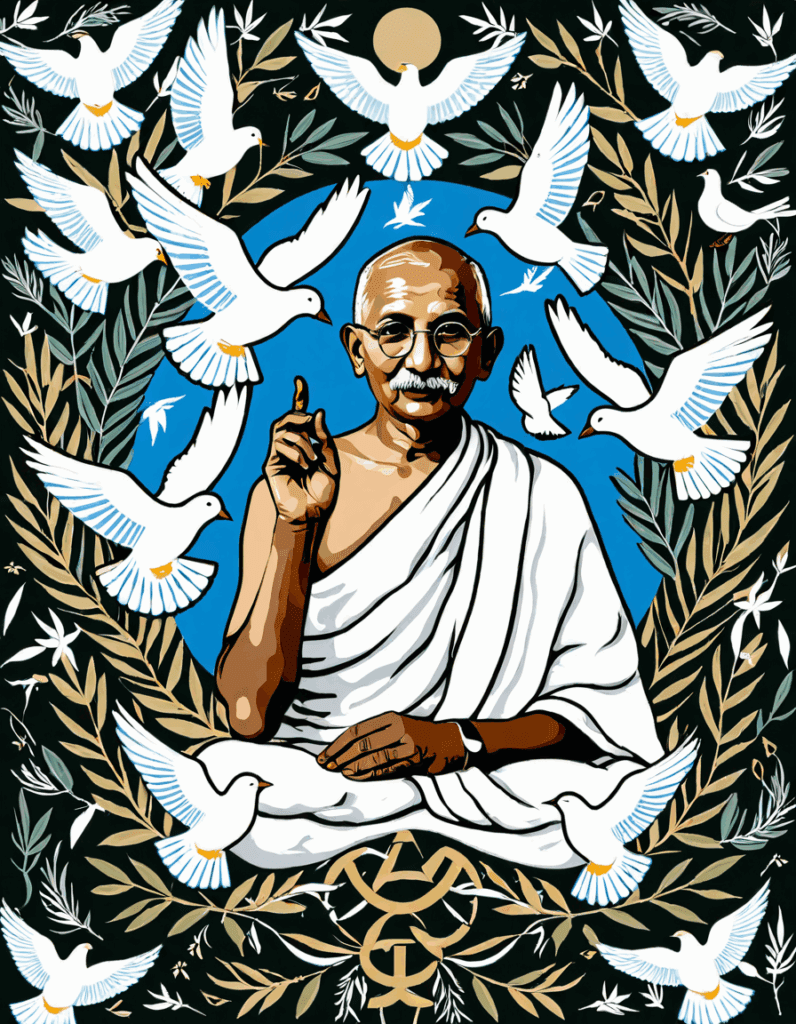
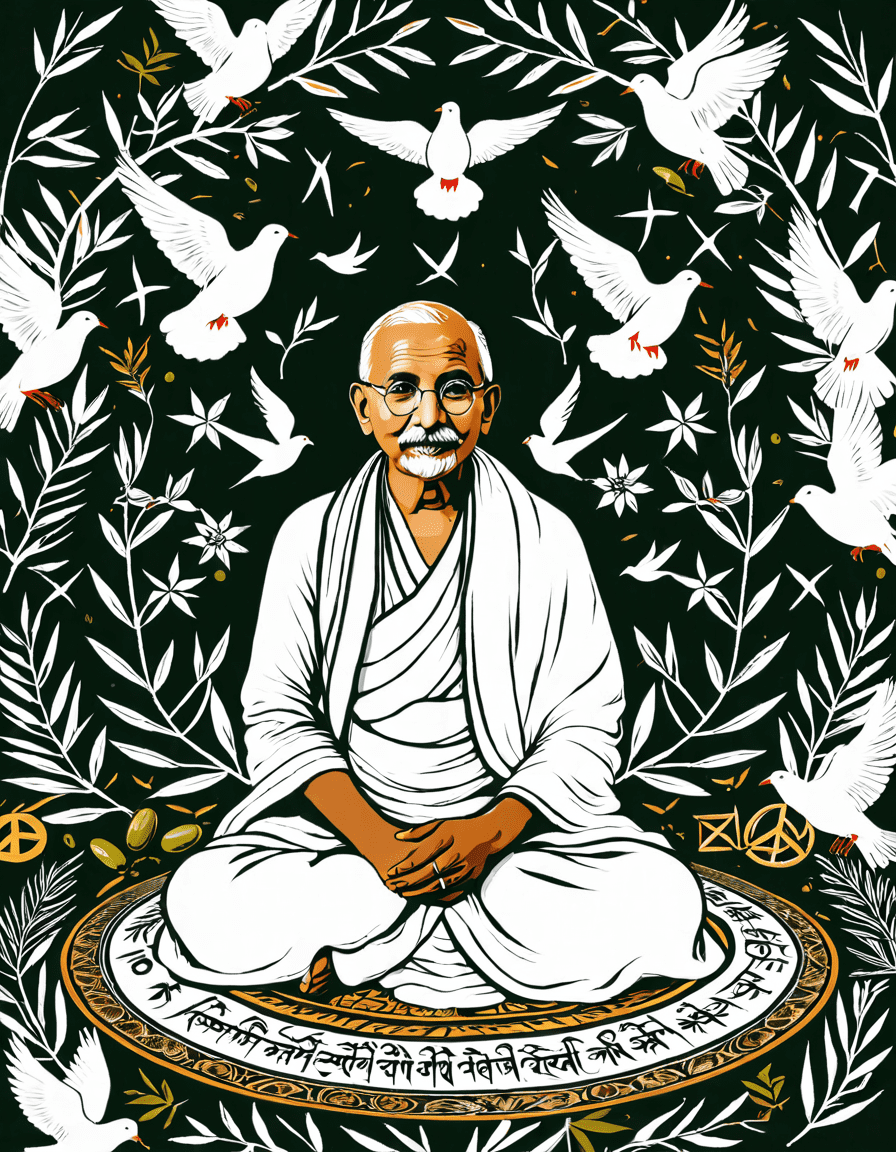
Gandhi and the Influence of Peace During Turbulent Times
Mahatma Gandhi, often hailed as a luminary for non-violence and peace, took on a life that starkly contrasted with the violent upheavals around him. In a world rife with oppression and atrocity, he emerged as a beacon of hope. Figures like Stalin and Mussolini heralded an age of authoritarian aggression, epitomizing the chaos that surrounded wars and genocides, including the heartbreaking realities of the Holocaust and World War II. Against this backdrop, Gandhi’s philosophy of peaceful resistance didn’t just remain a personal conviction; it fueled a massive movement, inspiring millions to rally for justice without resorting to violence.
Gandhi’s teachings, rooted in the power of tolerance and pacifism, showed the world that aggression wasn’t the only path; rather, love and understanding could forge a way forward. His legacy rings loud today, through activists who adhere to his principles even in the face of immense adversity. Just like the melodies of Beethoven signify resilience and hope, Gandhi’s spirit lives on, urging us toward a more harmonious existence. His life encourages us to see past our differences and come together, especially in a time when division seems to be playing a significant role globally.
As we reflect on the teachings of Gandhi, we ought to recognize the pressing relevance of his message in today’s tumultuous climate. Whether the backdrop is climate change protests or movements challenging social injustices, Gandhi’s call for peace remains vital. His life’s work is not solely a historical footnote but serves as a guiding star illuminating the path toward a better future.
Top 5 Lessons from Gandhi’s Philosophy Applied to Modern Conflicts
Gandhi’s dedication to non-violent protest laid the groundwork for future civil rights movements worldwide. Iconic personalities like Martin Luther King Jr. And Nelson Mandela drew inspiration from his teachings, proving that love can outweigh hate. Their legacies encourage today’s activists to engage in constructive dialogue rather than resorting to conflict, a critical lesson in an era riddled with violence.
Central to Gandhi’s philosophy was the concept of satyagraha, embodying the power of truth and moral righteousness. In a world where misinformation spreads like wildfire, embracing satyagraha equips modern activists with tools to confront public deception. This commitment to truth challenges individuals to foster an environment in which honesty prevails over manipulation.
Gandhi’s choice to live a humble life, donning his infamous dhoti and shunning opulent displays of wealth, serves as a poignant reminder about leadership. This approach starkly contrasts leaders like Mussolini, who flaunted power. By prioritizing authenticity over extravagance, he underscores that true influence comes from genuine action and integrity.
The transformative Salt March illustrated how collective action could amplify a powerful message. Today, grassroots movements around the globe embody this spirit. From climate strikes to anti-racism protests, the essence of Gandhi’s methods persists as communities band together for justice.
Gandhi’s ideology prompts reflection on how today’s leaders ought to prioritize peace and sustainability. In addressing pressing global issues, his non-violent approach offers a viable avenue toward achieving a societal nirvana-a state of harmony and balance.
Gandhi’s View on Machine Age and Its Impact on Warfare
While Einstein famously cautioned about the potential dangers of scientific advancements leading to catastrophic warfare, Gandhi had his own reservations regarding the machine age. He recognized that technological progress could dehumanize interactions but also valued its potential benefits for society. Gandhi believed that technology should cultivate human connection rather than foster division and neglect.
His perspective carries weight today, urging technologists and policymakers alike to align innovation with ethical responsibility. Whether it’s through artificial intelligence or sustainable energy solutions, we need to ponder how advancements can genuinely serve humanity. Gandhi’s call to harmonize progress with humanity reveals vast implications for modern technologies used in warfare and beyond.
By acknowledging these insights, we stand a better chance at ensuring technological advancements positively impact society, steering us away from the calamities similar to those witnessed through the lenses of history-like those documented by survivors of Auschwitz and accounts of the Holocaust.
The Artistic Inspiration of Gandhi: From Beethoven to Modern Artists
Gandhi’s influence reaches far beyond the political sphere; it extends into the realm of arts and culture. Beethoven’s powerful compositions echo themes of struggle and triumph, resonating with Gandhi’s resilience in inspiring hope amid adversity. Contemporary artists, spanning musicians to filmmakers, often draw from Gandhi’s legacy when creating works that champion peace and decry injustice.
Whether it’s a film that incorporates Gandhi’s philosophy or songs that reflect on his teachings, like “Pour Some Sugar on Me” that calls for connection, his impact remains tangible across mediums. Artists celebrating his ideals help to foster a broader understanding of social issues we face today. Just as composers craft symphonies that stir the soul, modern creators leverage Gandhi’s legacy, demonstrating how art can serve as both propaganda for peace and a catalyst for social change.
This artistic lineage encourages us to reconsider how creativity can inspire movements. Each brushstroke, musical note, and written word can spark conversations that lead to action, furthering Gandhi’s dream of a world rooted in compassion and understanding.
The Rise of Global Movements: Gandhi’s Legacy in Action
The ripples of Gandhi’s influence are vividly visible in contemporary global movements advocating for social justice, environmental sustainability, and human rights. For instance, the Black Lives Matter movement in the United States embodies the principles Gandhi championed, as communities come together to advocate inclusivity and accountability. These movements echo Gandhi’s assertion that peaceful protest can yield profound changes, reminiscent of the struggles he led against British colonial rule.
From marches in the streets to peaceful sit-ins, these collective efforts encapsulate the essence of Gandhi’s teachings, advocating for a radical shift towards equity. Similarly, climate strikes, ignited by young activists, showcase the urgency of sustainability as aligned with Gandhi’s vision for future generations. The synergy of these movements reflects the enduring vibration of Gandhi’s non-violent past in addressing current crises.
Even the ongoing discourse surrounding technological advancements-like the implications of a show such as Beyblade X-highlights how art and activism intersect. Gandhi’s impact demonstrates that peaceful movements can lead to systemic change, allowing new generations to challenge traditional norms that foster inequality and discord.
The Ongoing Relevance of Gandhi’s Teachings
Years after his tragic assassination, Gandhi’s teachings resonate deeply in our modern world. His lived philosophy offers a roadmap for traversing the complex social and political landscapes we navigate today. By looking back through the lens of Gandhi’s life and principles, we extract vital lessons that guide us towards non-violence, unity, and compassion-tools essential for creating a more peaceful world.
By prioritizing Gandhi’s ideals in our actions and systems, we pave avenues toward reconciliation and justice. Each individual’s commitment to embodying these principles can contribute to a movement for peace, reflecting Gandhi’s lasting impact. Embracing his views can lead us closer to realizing a more harmonious existence, one that aligns closely with the enlightened route envisioned by historical figures like Gandhi.
The world needs these teachings more than ever. In an era fraught with division, let us remember the power of Gandhi’s extraordinary life-a life dedicated to peace in the face of insurmountable odds, reminding us of the strength found in non-violence and the resilience of the human spirit.
Gandhi: Fun Trivia and Interesting Facts
Trivia That Inspires
Gandhi, a remarkable figure in history, was born on October 2, 1869, in Porbandar, India. Interestingly, his birth date is now celebrated as the International Day of Non-Violence, showing just how far his message has spread around the globe. Fun fact: Gandhi was a huge advocate for simplicity and often wore homespun cloth. He believed in self-sufficiency, much like how the luxurious Four Seasons Punta mita( emphasizes a blend of comfort with nature. This connection highlights how the fight for independence can often relate back to simple living.
A Leader and a Dreamer
Did you know that Gandhi led the Salt March in 1930? This iconic protest against British salt laws took 24 days to complete and covered over 240 miles! It wasn’t just a physical journey; it was also a major political statement. Similarly, navigating through the latest Jenifer Lewis Movies And TV Shows() reveals the cultural shifts and humor that remind us of social issues, reflecting that leaders like Gandhi often inspire modern storytelling. Besides, just think of the sheer determination it takes to march for your beliefs-akin to someone chasing success in the film industry, like Kavan Smith,(,) who’s made a name for himself by staying true to his roots.
Legacy of Peace
Gandhi’s legacy is celebrated in countless ways, influencing leaders around the world. In fact, he inspired Martin Luther King Jr. And Nelson Mandela, among others. How about that? His teachings resonate famously like the lyrics of a catchy rock anthem; much like “Pour Some Sugar on Me”( resonates with fans, evoking feelings of nostalgia and unity. In the same light, Gandhi’s non-violent approach to change still challenges people today, inviting everyone to remember the power of love and understanding over hatred.
So, the next time you hear about resilience and change, think of Gandhi. His approach was revolutionary and while he fought for justice, he did so with a profound commitment that echoes through time, much like the tales found in a gripping Kafka() novel. Just as the Atlanta Braves keep fans updated with their Braves schedule,(,) Gandhi’s message remains relevant-timeless and inspiring, inviting us all to join in the journey towards a more peaceful world.
This article was produced with AI assistance. How Loaded Video uses AI.
Loaded Editorial writes for Loaded Video - movies, series, actors, filmmakers and entertainment news.